
|
WEEK 7 |
Lolly Gagging
 |
|
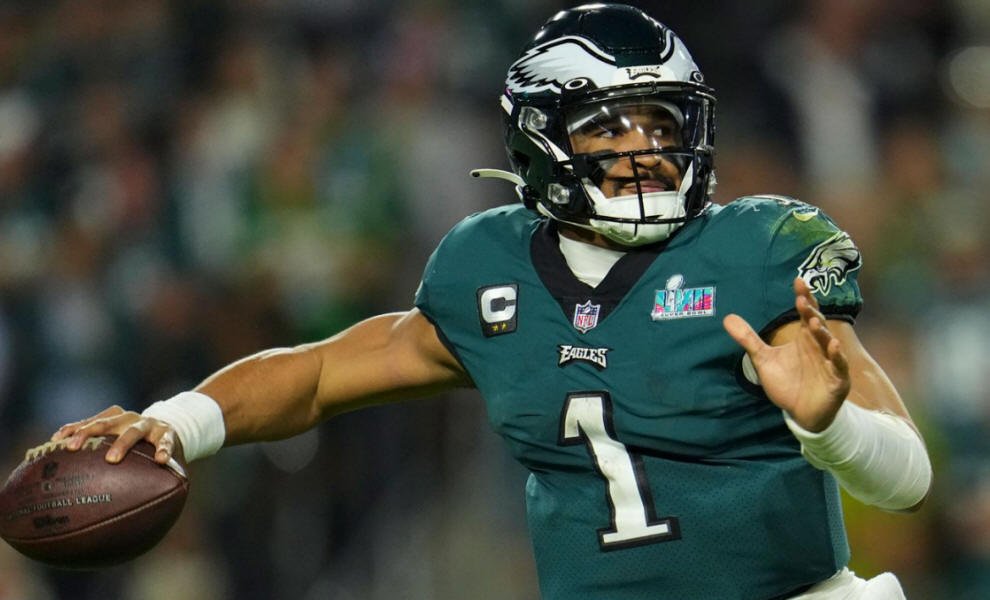
Former Tide quarterback Jalen Hurts led the Vulcans to a huge vict'ry in Week 7 of the BDFL |
The Vulcans maul the Armadillos, 51-10
 NORWOOD,
AL - "Lolly
gagging" is a phrase used in the United States for screwing
around, goofing off, etc. Whatever you want to call it, there
are a lot of ways to talk about wasting time in the English
language, doodle and dilly dally come to mind first, but I'm
sure there are some more expressions out there like
fiddle-farting around and others. "Lollygag" was historically
known as "lallygag" which came into English in the mid-19th
century meaning to dawdle. However, during that time, "lollygag"
also meant to fool around, so some were reluctant to use it in
public as a phrase for wasting time. Today "lollygag" means to
be idle, dawdle, or simply to waste time doing nothing
constructive. We've also got "dilly-dally" which basically means
the same thing. The base word "dally" came from the Old French
language from hundreds of years ago that meant to chat idly.
Over time "dally" picked up other meanings such as to toy with
things, or spend time idly. By the 19th century we had "dilly
dally" which evolved into a reduplication. A reduplication is
when you repeat the form of a word, but change the vowel. Other
examples of reduplications include "flip flop", "zig zag", and
"mish mash". Sometimes football teams can be accused of "lolly
gagging" around during practice and in games.
In Week 7 of the 30th season of the BDFL,
there were some "lolly gagging" going on during the week and on
the weekend. The Armadillos lolly-gagged the most, losing to the
Vulcans, 51-10. Others that could be thrown into the
lolly-gagging category for Week 7 included the Mayors, Dogs,
Freebirds, Wildcats and PowerSleds.
NORWOOD,
AL - "Lolly
gagging" is a phrase used in the United States for screwing
around, goofing off, etc. Whatever you want to call it, there
are a lot of ways to talk about wasting time in the English
language, doodle and dilly dally come to mind first, but I'm
sure there are some more expressions out there like
fiddle-farting around and others. "Lollygag" was historically
known as "lallygag" which came into English in the mid-19th
century meaning to dawdle. However, during that time, "lollygag"
also meant to fool around, so some were reluctant to use it in
public as a phrase for wasting time. Today "lollygag" means to
be idle, dawdle, or simply to waste time doing nothing
constructive. We've also got "dilly-dally" which basically means
the same thing. The base word "dally" came from the Old French
language from hundreds of years ago that meant to chat idly.
Over time "dally" picked up other meanings such as to toy with
things, or spend time idly. By the 19th century we had "dilly
dally" which evolved into a reduplication. A reduplication is
when you repeat the form of a word, but change the vowel. Other
examples of reduplications include "flip flop", "zig zag", and
"mish mash". Sometimes football teams can be accused of "lolly
gagging" around during practice and in games.
In Week 7 of the 30th season of the BDFL,
there were some "lolly gagging" going on during the week and on
the weekend. The Armadillos lolly-gagged the most, losing to the
Vulcans, 51-10. Others that could be thrown into the
lolly-gagging category for Week 7 included the Mayors, Dogs,
Freebirds, Wildcats and PowerSleds.
|
WEEK 7 |
 |
GRE |
MAY |
|
|
24 |
20 |
||
|
|
BLZ |
FRE |
|
|
24 |
17 |
||
|
|
JUG |
CHE |
|
| 31 |
28 |
||
 |
ARM |
VUL |
|
|
10 |
51 |
||
|
|
BUL |
DOG |
|
|
29 |
16 |
||
|
|
BAN |
GAM |
|
|
42 |
27 |
||
|
|
BEL |
SM |
|
|
34 |
29 |
||
|
|
WIL |
PS |
|
|
22 |
22 otv |

|
THE BDFL NEWS |
|
Iron Man |
||
|
||
|
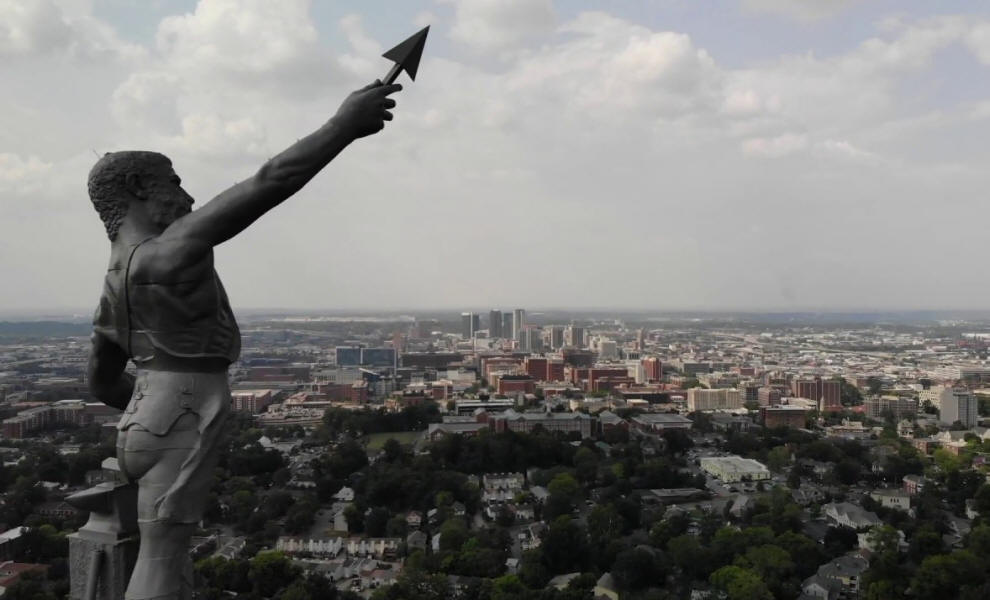
Birmingham's own iconic Vulcan statue |
||
|
|
 BIRMINGHAM,
AL - The Vulcan statue is the largest cast iron statue in the
world, and the city symbol of Birmingham, Alabama. Known
commonly as “Vulcan”, he stands high atop Red Mountain
overlooking the city of Birmingham to the north and mooning the
city of Homewood to the south. Vulcan’s roots are in the city’s
the iron and steel industry. The "Iron Man" statue stands
56-feet tall and he depicts the Roman god Vulcan (the god of the
fire and forge) along with ironworking equipment (anvil, block,
hammer, and spearpoint). The Vulcan statue was created as
Birmingham's entry for the 1904 World's Fair in St. Louis and
brought home the “Grand Prize”. If you've been to two World's
Fairs and one GF, you probably think you've seen it all. While Vulcan is the world's
largest statue made of cast iron, he is also among the nation's
tallest statues of any kind. Commissioned by the Commercial Club
of Birmingham, Italian-born sculptor Giuseppe Moretti began
designing the monumental figure in 1903, using a 6-foot-tall
model to study the form. Moretti next sculpted a clay master
model in an unfinished church in Passaic, New Jersey, and this
was then divided into sections and transported by railroad to
the Birmingham Steel and Iron Company for casting molds for the
iron. The Commercial Club of Birmingham held art shows,
concerts, baseball games, and other activities to raise the
estimated cost to build and transport the statue. Pot metal
statuettes of Vulcan were sold at both the St. Louis World's
Fair and in Birmingham for two dollars apiece to help fund the
costs to create the statue. The 29 individual grey iron castings
that make up Vulcan were made entirely in Birmingham from
locally produced iron. When the 1904 World's Fair ended, the
Vulcan statue was dismantled and returned to Birmingham and
reassembled at the Fairgrounds. It was not until 1936 that the
statue found its final home atop Red Mountain. In 2023 when the
BDFL had to replace the departing Mt. High Blue Deacons, the
league made the obvious move to add the North Birmingham Vulcans
in another effort to honor the “Iron Man” as the World Football
League’s (WFL) Birmingham Vulcans originally did back in 1975.
BIRMINGHAM,
AL - The Vulcan statue is the largest cast iron statue in the
world, and the city symbol of Birmingham, Alabama. Known
commonly as “Vulcan”, he stands high atop Red Mountain
overlooking the city of Birmingham to the north and mooning the
city of Homewood to the south. Vulcan’s roots are in the city’s
the iron and steel industry. The "Iron Man" statue stands
56-feet tall and he depicts the Roman god Vulcan (the god of the
fire and forge) along with ironworking equipment (anvil, block,
hammer, and spearpoint). The Vulcan statue was created as
Birmingham's entry for the 1904 World's Fair in St. Louis and
brought home the “Grand Prize”. If you've been to two World's
Fairs and one GF, you probably think you've seen it all. While Vulcan is the world's
largest statue made of cast iron, he is also among the nation's
tallest statues of any kind. Commissioned by the Commercial Club
of Birmingham, Italian-born sculptor Giuseppe Moretti began
designing the monumental figure in 1903, using a 6-foot-tall
model to study the form. Moretti next sculpted a clay master
model in an unfinished church in Passaic, New Jersey, and this
was then divided into sections and transported by railroad to
the Birmingham Steel and Iron Company for casting molds for the
iron. The Commercial Club of Birmingham held art shows,
concerts, baseball games, and other activities to raise the
estimated cost to build and transport the statue. Pot metal
statuettes of Vulcan were sold at both the St. Louis World's
Fair and in Birmingham for two dollars apiece to help fund the
costs to create the statue. The 29 individual grey iron castings
that make up Vulcan were made entirely in Birmingham from
locally produced iron. When the 1904 World's Fair ended, the
Vulcan statue was dismantled and returned to Birmingham and
reassembled at the Fairgrounds. It was not until 1936 that the
statue found its final home atop Red Mountain. In 2023 when the
BDFL had to replace the departing Mt. High Blue Deacons, the
league made the obvious move to add the North Birmingham Vulcans
in another effort to honor the “Iron Man” as the World Football
League’s (WFL) Birmingham Vulcans originally did back in 1975.|
2024 Season Flashbacks <<<<<<<<<<<<<<<<<<<<<<<<<<<<<<< |
|||
| W1-Dog Day Afternoon | W2-Stranglehold | W3-Boondocks | W4-Gut Wrencher |
| W5-Discombobulated | W6-Death Defying | W7-Lolly Gagging | |
|
|
|
|
|



Concept, names, logos and designs are all registered trademarks and intellectual property of The BDFL © 2024. TheBDFL.com is a production of Iron Hand Productions © 2024. It is intended solely for the use of the Big Daddy Football League (BDFL). Any other use without the expressed written consent of the BDFL is prohibited. Any re-broadcast, or re-distribution, of its contents can be punishable by law, or by Iron Hand. All rights reserved.