
|
WEEK 3 |
The Big One
 |
|
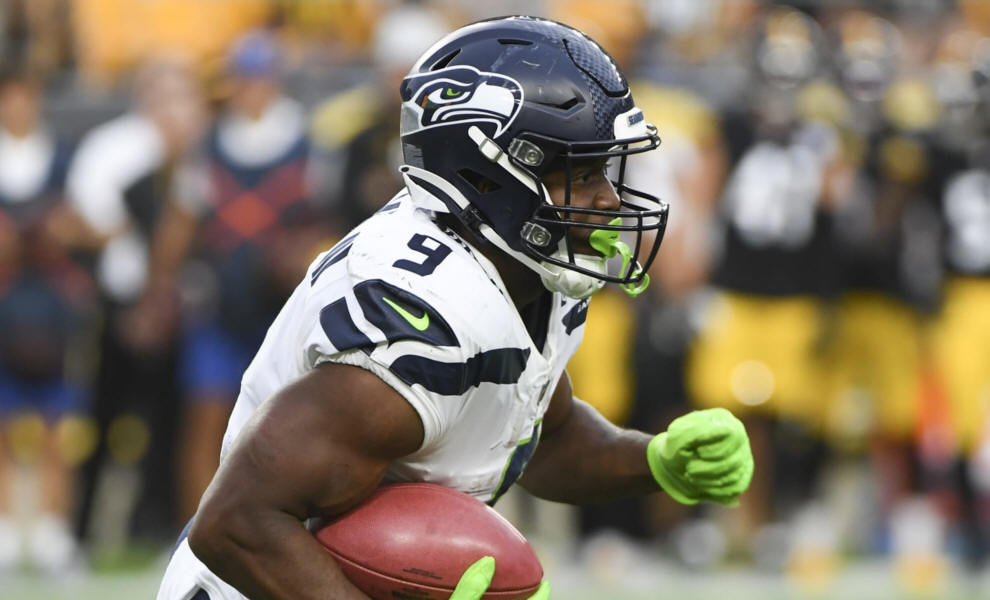
RB-Kenneth Walker/SEA delivered the biggest blow for the Grenadiers in Week 3 of the BDFL |
G-Men drop "The Big One" on the Bullets
 LOWNDESBORO, AL -
"The Big One" these days is used to describe the anticipated
megathrust earthquake along Western North America, or Japan.
Fred Sanford, played by veteran comedy actor Redd Foxx, used the
term "The Big One" when faking a heart attack that would happen
regularly on his classic television series entitled Sanford
and Son. In NASCAR, "The Big One" is also a phrase used to
describe a big crash that usually involves five, or more cars,
which occurs at some point in most all stock car races. When I
think of the "The Big One" it usually goes back to World War II
when the United States, led by President Harry S. Truman,
decided to drop nuclear weapons on Japan to help end the war. A
lot went down in March through August of 1945 that led to the
end of WWII. In the Pacific theatre, US air forces had launched
a massive firebombing of strategic cities in Japan in an effort
to destroy the Japanese war industry and civilian morale. This
devastating bombing raid on Tokyo in March was the deadliest
conventional bombing raid in history. On April 12, President
Roosevelt died and was succeeded by his vice president, Harry S.
Truman. Benito Mussolini was killed by Italian partisans on
April 28 and Hitler committed suicide in his headquarters on
April 30. American naval and amphibious forces were moving
towards Japan, taking Iwo Jima by March, and Okinawa by the end
of June. At the same time, a naval blockade by submarines was
strangling Japan's economy and drastically reducing its ability
to supply overseas forces. By July of 1945, the United States’
Manhattan Project had produced two types of atomic bombs:
"Little Boy", an enriched uranium gun-type fission weapon, and
"Fat Man", a plutonium implosion-type nuclear weapon. On July
11, Allied leaders met in Potsdam, Germany to confirm agreements
about Germany’s surrender and the American, British and Chinese
governments reiterated the demand for unconditional surrender of
Japan, specifically stating that "the alternative for Japan is
prompt and utter destruction". The call for unconditional
surrender was rejected by the Japanese, so on August 6, Truman
dropped "The Big One" on Hiroshima. When the Japanese refused to
surrender after "Little Boy", Harrry dropped "Fat Man" on
Nagasaki on August 9. On the night of August 10, Emperor
Hirohito agreed to accept the unconditional surrender terms
demanded by the Allies in the Potsdam Declaration. On August 15,
the Emperor communicated this decision to the Japanese people
through a speech on the radio. Surrender documents were finally
signed by the Japanese foreign affairs minister Mamoru
Shigemitsu at Tokyo Bay on the deck of the American battleship
USS Missouri on September 2, 1945, thus ending World
War II. In Week 3 of the BDFL, seems the Armadillos, Gamblers
and Bellcows all missed out on "The Big One". The Texas Armada
left 24 points on the bench with RB-Achane/MIA, while The
Gambino left 28 points on the pine with PK-Gay/IND and the
Bellringers left 19 points behind from Ft. Payne's
PK-McPherson/CIN. The Grenadiers (formerly known as the
Grenades) also dropped "The Big One" on the Bullets at Rebel
Stadium (49-33) to get off the schneid and in the "win" column
for the first time in 2023.
LOWNDESBORO, AL -
"The Big One" these days is used to describe the anticipated
megathrust earthquake along Western North America, or Japan.
Fred Sanford, played by veteran comedy actor Redd Foxx, used the
term "The Big One" when faking a heart attack that would happen
regularly on his classic television series entitled Sanford
and Son. In NASCAR, "The Big One" is also a phrase used to
describe a big crash that usually involves five, or more cars,
which occurs at some point in most all stock car races. When I
think of the "The Big One" it usually goes back to World War II
when the United States, led by President Harry S. Truman,
decided to drop nuclear weapons on Japan to help end the war. A
lot went down in March through August of 1945 that led to the
end of WWII. In the Pacific theatre, US air forces had launched
a massive firebombing of strategic cities in Japan in an effort
to destroy the Japanese war industry and civilian morale. This
devastating bombing raid on Tokyo in March was the deadliest
conventional bombing raid in history. On April 12, President
Roosevelt died and was succeeded by his vice president, Harry S.
Truman. Benito Mussolini was killed by Italian partisans on
April 28 and Hitler committed suicide in his headquarters on
April 30. American naval and amphibious forces were moving
towards Japan, taking Iwo Jima by March, and Okinawa by the end
of June. At the same time, a naval blockade by submarines was
strangling Japan's economy and drastically reducing its ability
to supply overseas forces. By July of 1945, the United States’
Manhattan Project had produced two types of atomic bombs:
"Little Boy", an enriched uranium gun-type fission weapon, and
"Fat Man", a plutonium implosion-type nuclear weapon. On July
11, Allied leaders met in Potsdam, Germany to confirm agreements
about Germany’s surrender and the American, British and Chinese
governments reiterated the demand for unconditional surrender of
Japan, specifically stating that "the alternative for Japan is
prompt and utter destruction". The call for unconditional
surrender was rejected by the Japanese, so on August 6, Truman
dropped "The Big One" on Hiroshima. When the Japanese refused to
surrender after "Little Boy", Harrry dropped "Fat Man" on
Nagasaki on August 9. On the night of August 10, Emperor
Hirohito agreed to accept the unconditional surrender terms
demanded by the Allies in the Potsdam Declaration. On August 15,
the Emperor communicated this decision to the Japanese people
through a speech on the radio. Surrender documents were finally
signed by the Japanese foreign affairs minister Mamoru
Shigemitsu at Tokyo Bay on the deck of the American battleship
USS Missouri on September 2, 1945, thus ending World
War II. In Week 3 of the BDFL, seems the Armadillos, Gamblers
and Bellcows all missed out on "The Big One". The Texas Armada
left 24 points on the bench with RB-Achane/MIA, while The
Gambino left 28 points on the pine with PK-Gay/IND and the
Bellringers left 19 points behind from Ft. Payne's
PK-McPherson/CIN. The Grenadiers (formerly known as the
Grenades) also dropped "The Big One" on the Bullets at Rebel
Stadium (49-33) to get off the schneid and in the "win" column
for the first time in 2023.
|
WEEK 3 |
Final Scores
|
||||||||||||||||||||||||||||||||||||||||||||||||
|
COMPLETE SCORING DATA FROM THE ALADDIN SCORING SYSTEM |



|
THE BDFL NEWS |
Throwback Week
|
|
|
Billy Kilmer was as tough on the field as off the field as the Saints' signal caller back in 1969 |
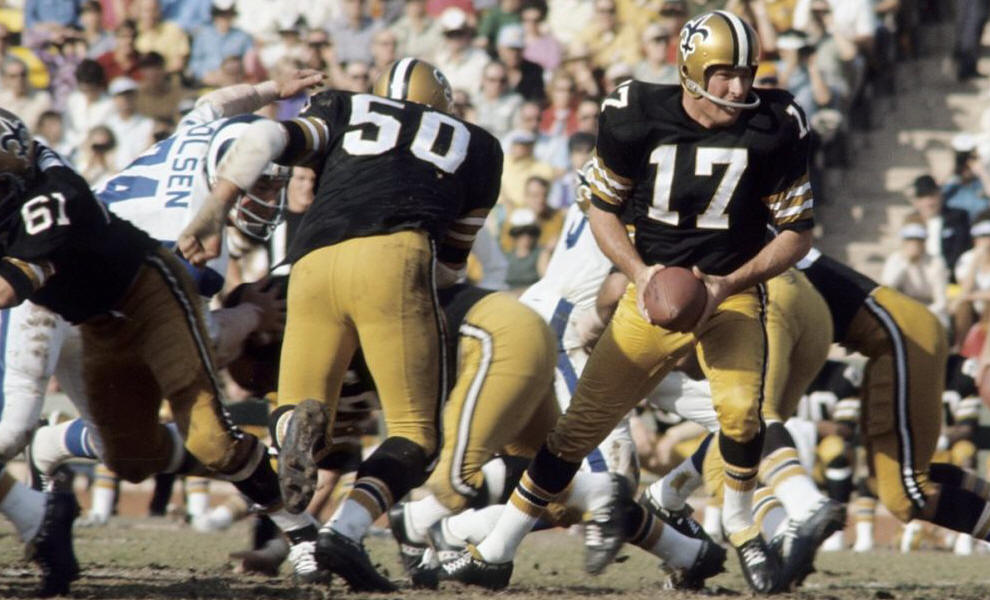
Throwback Week looks back to 1969 QBs
 NEW
ORLEANS
-
On February 10, 1967, Kilmer was selected in the expansion draft by
the New Orleans Saints and, despite originally being thought of as the
team's third-best signal caller, he became the team's starting quarterback
for much of the next four seasons. He was the starter for the team's
first game, a 27-13 loss at home to the Los Angeles Rams. Kilmer lost
his starting job in 1967 after the first three games (all losses), and
was replaced by former Baltimore Colts QB-Gary Cuozzo. However, Kilmer
regained that job in 1968. His most prolific performance during his
four-year stint with the team came in 1969, when he threw for 345 yards
and six touchdowns in a 51–42 win over the St. Louis Cardinals on
November 2, 1969. Kilmer finished his career with the Saints throwing
for 47 touchdowns and 7,490 years. During the 1970 season, Kilmer's last
in New Orleans, rumors surfaced that Kilmer missed curfew before a game
against the Denver Broncos and that his Saints teammates had nicknamed
him "Ole Whiskey." That reputation had been noted by Saints owner John
Mecom, Jr., who mentioned Kilmer's many late-hour visits to New Orleans
bars while playing for the team. Kilmer's six (6) touchdown passes in
one game was the club record until November of 2015 when Drew Brees threw
seven (7) TDs in a thrilling 52-49 win over the New York Giants.
Kilmer's honorary BDFL team for Week 6's Throwback Week will be called
the Crescent City Killers.
NEW
ORLEANS
-
On February 10, 1967, Kilmer was selected in the expansion draft by
the New Orleans Saints and, despite originally being thought of as the
team's third-best signal caller, he became the team's starting quarterback
for much of the next four seasons. He was the starter for the team's
first game, a 27-13 loss at home to the Los Angeles Rams. Kilmer lost
his starting job in 1967 after the first three games (all losses), and
was replaced by former Baltimore Colts QB-Gary Cuozzo. However, Kilmer
regained that job in 1968. His most prolific performance during his
four-year stint with the team came in 1969, when he threw for 345 yards
and six touchdowns in a 51–42 win over the St. Louis Cardinals on
November 2, 1969. Kilmer finished his career with the Saints throwing
for 47 touchdowns and 7,490 years. During the 1970 season, Kilmer's last
in New Orleans, rumors surfaced that Kilmer missed curfew before a game
against the Denver Broncos and that his Saints teammates had nicknamed
him "Ole Whiskey." That reputation had been noted by Saints owner John
Mecom, Jr., who mentioned Kilmer's many late-hour visits to New Orleans
bars while playing for the team. Kilmer's six (6) touchdown passes in
one game was the club record until November of 2015 when Drew Brees threw
seven (7) TDs in a thrilling 52-49 win over the New York Giants.
Kilmer's honorary BDFL team for Week 6's Throwback Week will be called
the Crescent City Killers.
|
2023 Season Flashbacks <<<<<<<<<<<<<<<<<<<<<<<<<<<<<<<< |
|||
| W1-The FamilyT | W2-Bloody Sunday | W3-The Big One | W4- |
|
|
|
|
|



Concept, names, logos and designs are all registered trademarks and intellectual property of The BDFL © 2023. TheBDFL.com is a production of Iron Hand Productions © 2023. It is intended solely for the use of the Big Daddy Football League (BDFL). Any other use without the expressed written consent of the BDFL is prohibited. Any re-broadcast, or re-distribution, of its contents can be punishable by law, or by Iron Hand. All rights reserved.
| TheBDFL.com |